Where Can English-Speaking Expats Practice Buddhist Meditation in Portugal?
Four Buddhist traditions operate across Lisbon, Sintra, and the Portuguese countryside, each offering English-language meditation classes and retreats for expats and visitors.
Four Buddhist traditions operate across Lisbon, Sintra, and the Portuguese countryside, each offering English-language meditation classes and retreats for expats and visitors.
If you're an English-speaking expat or digital nomad searching for Buddhist meditation in Portugal, you'll find four distinct traditions with active English programming: New Kadampa (Tibetan), Vipassana/Theravada, Zen, and Diamond Way Karma Kagyu. Portugal's small Buddhist community — roughly 0.2% of the population — has built surprisingly robust infrastructure for English speakers, but you need to know which centers offer weekly community practice versus intensive silent retreats, and which lineages match your background.
Contents
- What Buddhist Traditions Operate in Portugal?
- Which Lisbon Centers Offer Weekly English-Language Classes?
- Should I Visit the Kadampa Temple in Sintra?
- How Do I Apply for a 10-Day Vipassana Retreat?
- Where Are the Best Countryside Retreat Centers?
- Are These Centers Welcoming to Complete Beginners?
- What Do Classes and Retreats Actually Cost?
- Which Center Fits Your Situation?
What Buddhist Traditions Operate in Portugal?
Portugal hosts four Buddhist lineages with English-accessible programming:
| Tradition | Center | Format | Location |
|---|---|---|---|
| New Kadampa (Tibetan) | Kadampa Temple for World Peace | Classes + retreats | Sintra |
| Vipassana/Theravada | Vipassana Meditation Portugal | 10-day residential courses | Countryside |
| Zen | Agora Lisboa | Drop-in classes + silent sits | Central Lisbon |
| Diamond Way Karma Kagyu | Lisboa Diamond Way Buddhist Center | Drop-in meditation | Lisbon |
The landscape splits between sangha centers (weekly community practice in Lisbon) and retreat venues (multi-day immersive experiences in countryside settings). Understanding this distinction matters: are you looking for ongoing practice community, or intensive training?
Which Lisbon Centers Offer Weekly English-Language Classes?
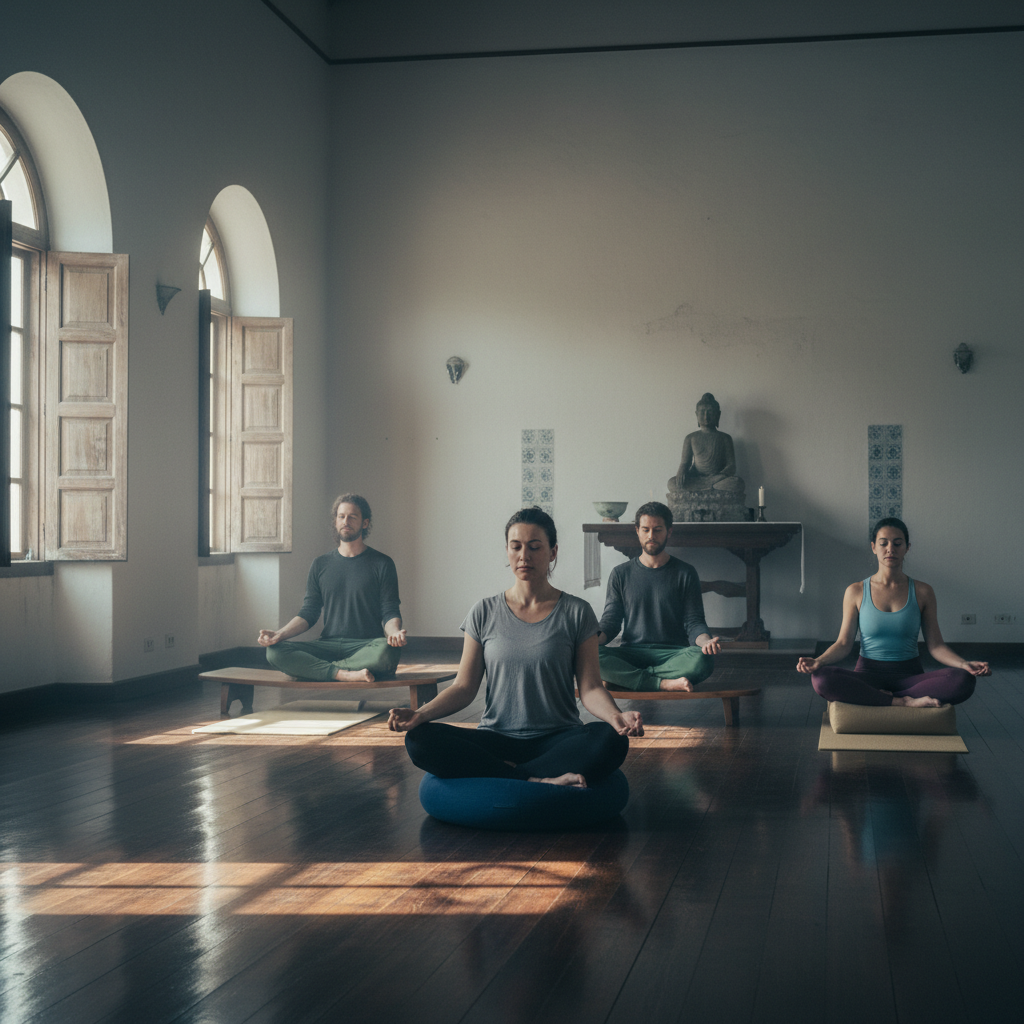
Three Lisbon centers provide consistent English-language meditation for residents and long-term visitors.
Agora Lisboa
Agora Lisboa functions as both a meditation center and Buddhist studies hub in central Lisbon. You'll find guided meditation classes alongside silent Zen practice sessions and educational programs on Buddhist philosophy. The center also offers Ashtanga yoga. Check their website for current schedules, as class times vary by format.
DharmaHouse Lisbon
DharmaHouse Lisbon positions itself as a "gateway" center, making authentic Buddhist teachings accessible to everyone regardless of background. This accessibility mission makes it particularly suitable for English-speaking expats taking first steps into Buddhist practice. The center combines meditation instruction with Buddhist studies.
Lisboa Diamond Way Buddhist Center
Lisboa Diamond Way Buddhist Center teaches the Karma Kagyu lineage of Tibetan Buddhism associated with the 17th Karmapa. Founded in 2004 in Sintra, the center relocated to Lisbon in 2011 and opened a new meditation room in 2021. This is lineage-based practice — you'll encounter traditional Tibetan Buddhist frameworks rather than secularized mindfulness. Contact them through their website for current session times.
All three centers maintain established English-speaking communities. You won't walk into Portuguese-only instruction. For weekly practice rhythm, these Lisbon options beat making repeated trips to Sintra or booking countryside retreats.
Should I Visit the Kadampa Temple in Sintra?
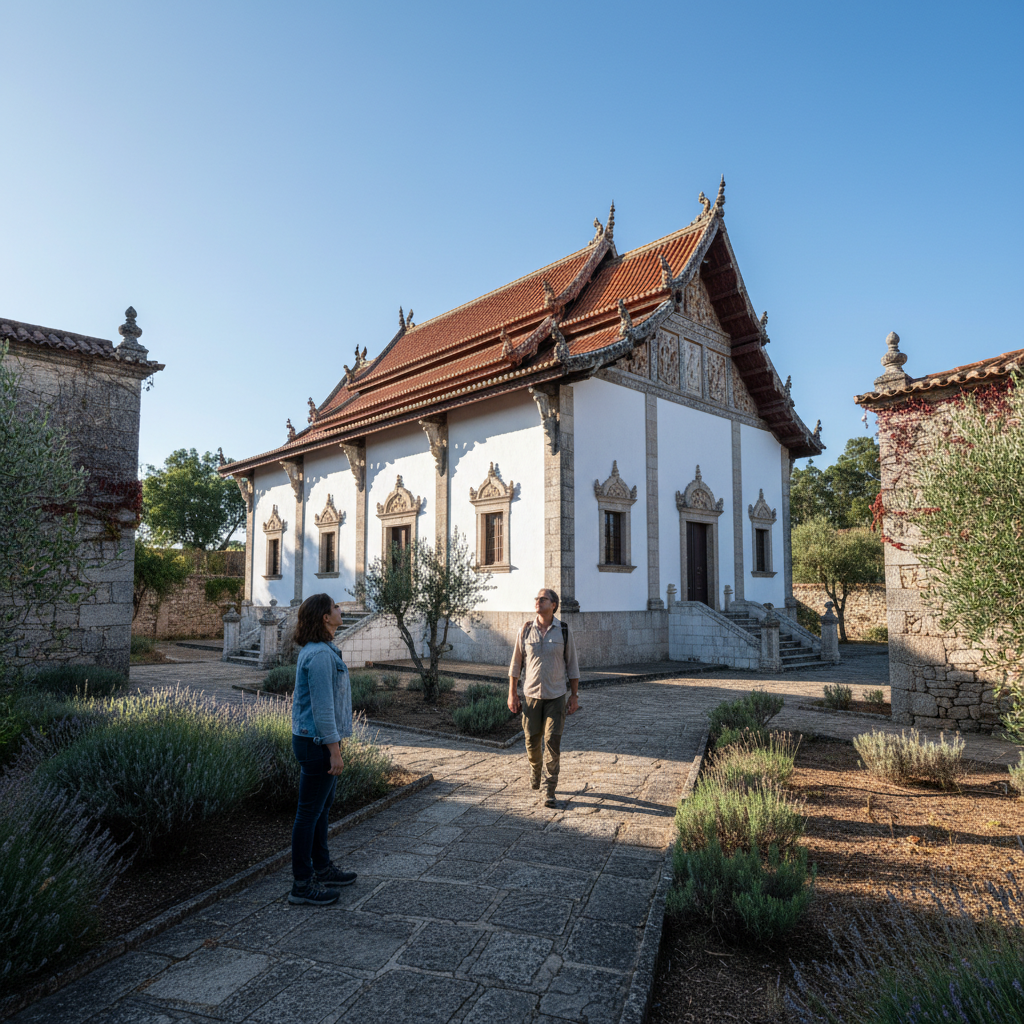
The Kadampa Temple for World Peace is the fourth in the worldwide Kadampa temple network, functioning as both an architectural landmark and active meditation center. Located in Sintra and accessible via a €2.30 train from Lisbon Rossio, it's the most visible Buddhist presence in Portugal.
The New Kadampa Tradition (NKT) runs structured classes in Portuguese, English, and Spanish. You can visit for a single class or participate in longer retreat programs — check the website for current scheduling and pricing.
You'll encounter online debates about the NKT organization. Some Buddhist communities criticize the tradition's break from mainstream Gelug teachings and its founder's disputed relationship with the Dalai Lama. This matters if you're deeply invested in lineage authenticity. It matters less if you're simply seeking meditation instruction.
"The teachers are great, the atmosphere is welcoming, and I've found the teachings on meditation, suffering, and compassion to be really valuable." — From a discussion on r/Buddhism
For day visitors combining Sintra sightseeing with meditation, the temple offers an accessible introduction without requiring multi-day commitment. Take the morning train from Lisbon, attend a class, explore the grounds, and return by afternoon. Weekend classes typically draw more English speakers than weekday sessions.
How Do I Apply for a 10-Day Vipassana Retreat?
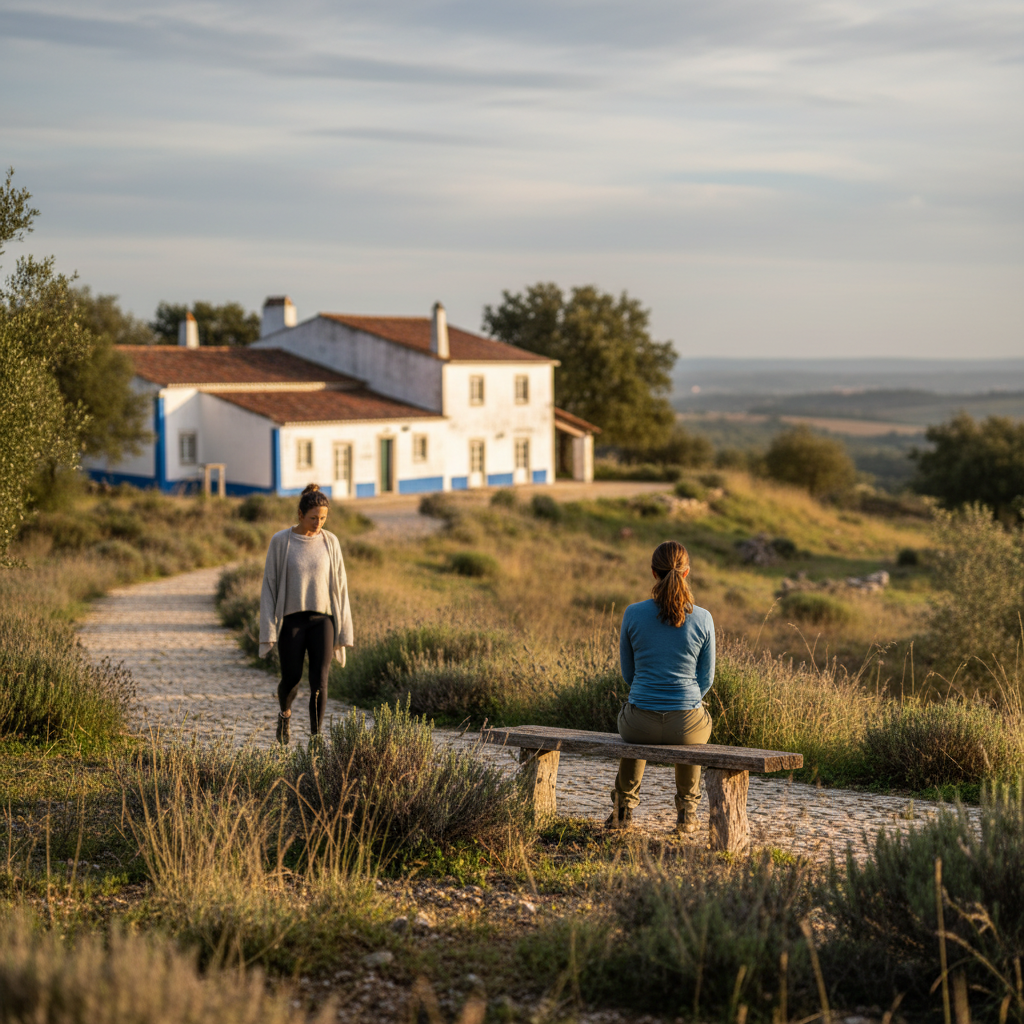
Vipassana Meditation Portugal operates on a completely different model than drop-in centers. You apply online for specific 10-day course dates, often facing waiting lists for popular periods (summer and early autumn fill quickly).
The residential format follows S.N. Goenka's standardized global protocol:
- Arrive on day zero
- Maintain Noble Silence for the full 10 days
- Follow the daily schedule from 4am wake-up to 9pm lights-out
- Complete the entire course without leaving
English instruction is standard, delivered through Goenka's recorded discourses each evening.
The dana (donation) model means no fixed fees. You attend the full 10 days receiving instruction, accommodation, and vegetarian meals, then offer a voluntary donation at the end. Previous students' donations fund your course; your donation funds the next one.
Set realistic expectations about content. The format emphasizes meditation technique — body scanning, breath awareness, equanimity cultivation — rather than Buddhist philosophy or doctrine.
"I have studied Buddha's teaching for around 2 years now and I regret I didn't learn anything new in this 10 day intensive course." — From a discussion on r/Vipassana
Don't treat this as a casual introduction. The 4am starts, 10+ hours of daily sitting, and complete silence challenge even experienced meditators. If you can't currently sit still for 30 minutes, build a foundation elsewhere first.
For more context on Vipassana experiences specifically for women, see our Vipassana Retreats for Women in Portugal and the Algarve guide.
Where Are the Best Countryside Retreat Centers?
Five countryside venues offer deeper immersion, but they vary in Buddhist authenticity and accessibility.
Brahma Vihara Portugal
Brahma Vihara Portugal operates in northern Portugal's rolling hills, designed specifically for deep meditation and intensive spiritual practice. This serves serious practitioners seeking multi-day immersion. The remote location requires a rental car or coordinated transport.
Karuna Retreat Center
Karuna Retreat Center takes its name from the Buddhist concept of compassion (karuṇā) and operates as a non-profit organization. This distinction matters — non-profit models typically prioritize authentic practice over revenue optimization.
House of Zen Estoril
House of Zen Estoril blends Zen meditation with yoga in the easily accessible Cascais area. Tripadvisor reviews consistently praise the beginner-friendly atmosphere. The Zen name suggests Buddhist roots, but the yoga integration indicates a wellness hybrid rather than strict lineage practice.
"I just arrived home after a 6-Days-Yoga-Retreat at the House of Zen in Estoril, Portugal, and I can say: It was wonderful! It was my first time doing a retreat." — From a review on Tripadvisor
Humkara Dzong
Humkara Dzong in Loulé, Algarve, is a sacred meditation place — dzong means fortress or monastery in Tibetan tradition. It's part of the Ogyen Kunzang Chöling school of Tibetan Buddhism. Approach this as a pilgrimage site requiring proper etiquette rather than a drop-in tourist attraction. Contact locally before visiting to confirm access.
The Shanti Space
The Shanti Space near Lisbon hosts curated retreats focused on self-care, inner wellness, and spiritual growth. This is broader than Buddhism alone — a multi-tradition environment. If you prefer variety over lineage consistency, their curated approach offers exposure to different teachers and methods.
Key distinction: Brahma Vihara, Karuna, and Humkara Dzong teach within established Buddhist traditions. House of Zen and The Shanti Space use Buddhist aesthetics within broader wellness programming. Both have value, but they serve different needs.
Are These Centers Welcoming to Complete Beginners?
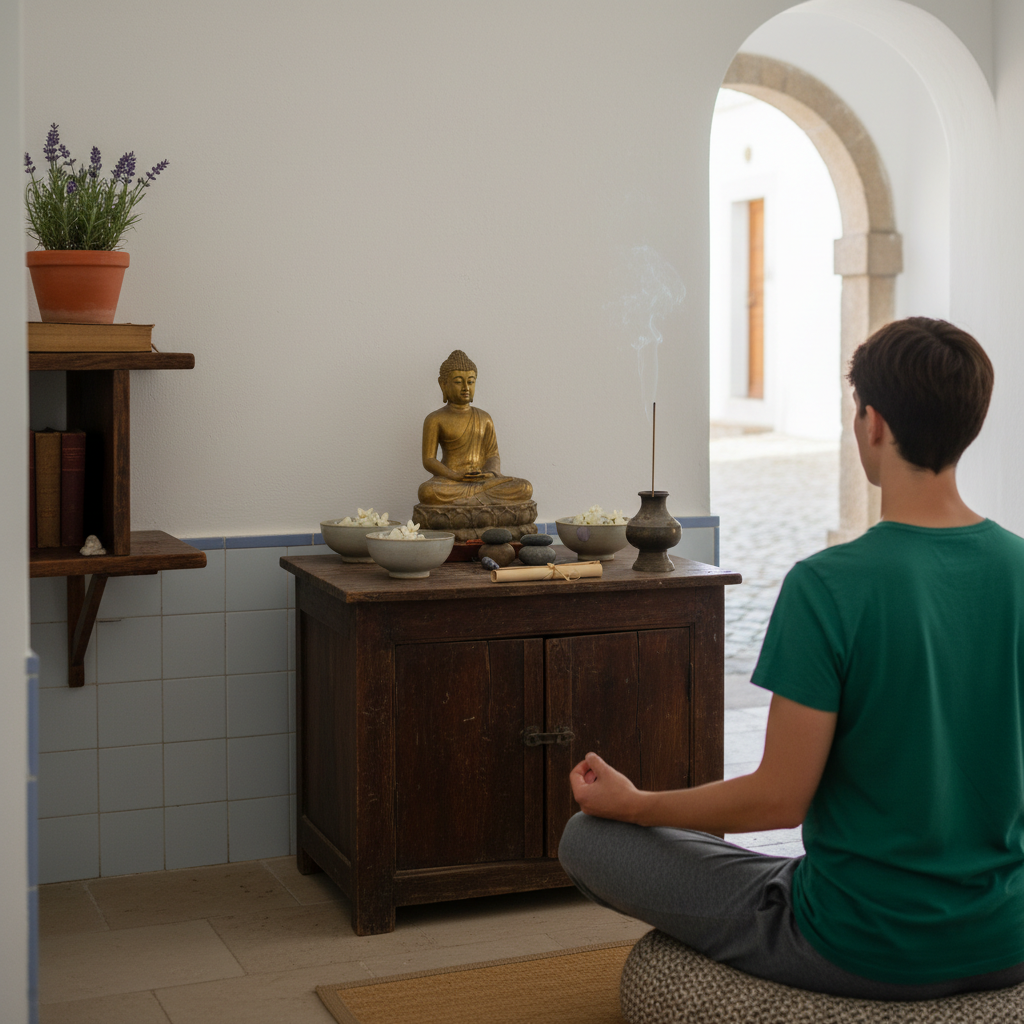
You don't need to be Buddhist to attend any center listed here, and you don't need prior meditation experience.
Best for absolute beginners:
- Agora Lisboa — guided meditation classes provide spoken instruction throughout, rather than assuming you know what to do
- DharmaHouse Lisbon — the explicit "gateway" mission means they expect complete beginners
- Kadampa Temple in Sintra — offers introductory courses separate from ongoing practitioner classes; check for "Introduction to Buddhism" series
Steeper learning curve:
- Zen silent sessions (including at Agora) — you'll encounter ritual forms like bowing, walking meditation protocols, and zazen posture corrections that feel awkward without prior exposure
- Vipassana's 10-day format — paradoxically welcomes absolute beginners while intimidating experienced meditators. The program assumes zero experience but demands serious commitment (Noble Silence, 4am starts, 10+ hours daily sitting)
Philosophy engagement varies: Agora and DharmaHouse let you engage with Buddhist concepts as much or as little as you want. Vipassana separates technique from religion explicitly. Diamond Way and Kadampa integrate Buddhist teaching more thoroughly.
Bottom line: Walk into any beginner class at Agora, DharmaHouse, or Kadampa's introductory sessions with zero experience. Tell the teacher it's your first time. You'll receive adapted instruction.
What Do Classes and Retreats Actually Cost?
| Type | Typical Cost | Notes |
|---|---|---|
| Vipassana 10-day retreat | Donation-based (dana) | No fixed fee; meals and accommodation included |
| Kadampa Temple classes | ~€5–15/session (based on NKT norms) | Check website for retreat pricing |
| Lisbon drop-in centers | ~€10–20/session | Membership options may be available |
| Countryside multi-day retreats | €300–800+ | Varies by length; includes accommodation/meals |
| Sintra transport (return) | ~€4.60 | €2.30 each way from Lisbon Rossio |
About the Vipassana donation model: You attend the full 10 days, receive instruction, accommodation, and vegetarian meals, then donate what you feel the course was worth. There's no minimum — genuine financial hardship doesn't exclude anyone.
Monthly practice cost example: Four weekly sessions at a Lisbon drop-in center runs roughly €40–80/month. A 10-day Vipassana retreat costs whatever you donate. These models serve completely different budgets and commitment levels.
Ask about sliding scale, donation options, or work exchange if cost presents barriers. Many centers prefer accessible participation over excluding people.
Which Center Fits Your Situation?
Lisbon residents and long-term expats → Weekly community practice at Agora Lisboa or Lisboa Diamond Way. Central locations enable consistent attendance, and you'll build relationships within the English-speaking sangha over months.
Short-term visitors and tourists → Prioritize the Kadampa Temple in Sintra. Combine a class or temple visit with standard Sintra tourism (Pena Palace, Quinta da Regaleira). No multi-day commitment required.
Serious retreat seekers → Choose between Vipassana Portugal's 10-day courses (technique-focused, donation-based, demanding) and Brahma Vihara in northern Portugal (countryside immersion, less structured intensity).
Digital nomads → Stick to Lisbon's drop-in centers (Agora, DharmaHouse, Diamond Way) or plan Sintra day visits around work schedules. Avoid programs requiring consecutive-day attendance.
First-time retreat participants → Consider House of Zen Estoril's beginner-friendly yoga-meditation blend before jumping to 10-day Vipassana. Build retreat experience gradually.
How Should You Plan Your First Visit?
Start by confirming English availability and beginner-friendliness through center websites. Agora Lisboa, DharmaHouse Lisbon, and the Kadampa Temple all provide explicit English-language information.
Check current schedules before visiting — Buddhist centers often adjust programming seasonally, and the schedule you found online three months ago may not be current.
For your first Buddhist meditation experience, choose guided classes over silent sessions. Book an introductory course at Kadampa or attend Agora's guided meditation rather than walking into a Zen silent sit.
Bring comfortable loose clothing, layers for temperature variation (meditation halls run cooler than you expect), and water. Most centers provide cushions.
Tell the teacher you're new when you arrive. This isn't embarrassing — it's essential information that allows them to adapt instruction.
Start with single sessions before committing to memberships, courses, or retreats. One class shows you whether the community and style fit. Return at least twice before deciding whether a particular sangha works for you.