Silent Retreat Alentejo: Your Complete Guide to Meditation Escapes in Portugal's Heartland
Find the best silent retreats in Alentejo with our detailed guide. Compare Vipassana centers, pricing, preparation tips, and what to expect during noble silence.
If you're standing at a crossroads in your life—exhausted by endless notifications, overwhelmed by work, or simply craving stillness—you're not alone. Thousands of seekers journey to Alentejo each year for silent retreats, and many discover that a week of noble silence rewires how they think, feel, and live. But before you commit a week and a few thousand euros to a silent retreat in Alentejo, you need to know exactly what you're signing up for: which meditation tradition fits your practice, how to prepare mentally, what each retreat center actually offers, and whether you're ready for the discomfort that comes with turning inward.
This guide walks you through everything: from understanding what happens inside the meditation hall to booking your escape from Lisbon to navigating the emotional terrain of your first extended silence.
What Actually Happens During a Silent Retreat in Alentejo?
A silent retreat sounds straightforward until you're sitting in it. The silence itself isn't just the absence of talking. It's a structured practice called noble silence, and it means something very specific.
Noble silence encompasses three commitments: no talking (obviously), no eye contact, and no written communication. You won't exchange pleasantries at breakfast. You won't journal about your feelings for a friend to read. You won't even make eye contact long enough to smile at a fellow meditator. The purpose isn't punishment; it's removing the social scaffolding that normally lets us perform identity and avoid ourselves.
Here's what your day actually looks like inside noble silence. You wake at 5:30 AM to a gentle bell. By 6:00 AM, you're in the meditation hall at Quinta Marugo's pagoda or Ruah Yoga's minimalist meditation room, sitting on a cushion facing the same wall every day. The first meditation session runs ninety minutes with no movement. Your job: observe your breath, follow your mind's endless commentary, and gently return to breath. Repeat.
At 7:30 AM, you eat breakfast in silence, serving yourself from shared dishes, eating at your own pace, finishing when you're done. No one is watching. No one cares. That freedom from observation is sometimes harder than the meditation itself.
The day continues in a rhythm: meditation session, breakfast, individual practice time (walking meditation, self-directed practice, rest), lunch in silence, afternoon group session, dinner, evening meditation, bed by 9:00 PM. The structure is repetitive by design. By day three, your mind stops fighting the monotony and drops deeper.
What differentiates a silent retreat from a wellness or yoga retreat is methodology. A yoga retreat might include silent meditation but primarily teaches sequences, adjustments, and physical practice. A wellness retreat mixes meditation with spa services, workshops, and social interaction. A silent retreat is meditation-only and commits fully to silence as the container.
Mentally, expect a curve: excitement day one, boredom or irritation days two through four, breakthrough or catharsis days five through seven. Some people cry. Some feel blissful peace. Most experience both. You're not broken if you feel restless; your mind is simply meeting its own patterns without distraction.
Which Meditation Style Should You Choose: Vipassana vs. Other Traditions?
Not all silent retreats teach the same practice. The tradition you choose determines the technique, daily rhythm, instructor approach, and the specific mental states you'll cultivate. Understanding this choice before booking saves regret.
Vipassana (Pali for "insight" or "clear seeing") is the most common silent retreat tradition in Alentejo. Vipassana teaches you to observe bodily sensations without reaction. You sit quietly, scan your body from crown to toes, notice tingling, pain, pressure, numbness, anything—and practice not responding with craving or aversion. The teaching is that by training equanimity with sensation, you rewire how you respond to all of life's moments. Vipassana retreats are typically ten days, entirely silent, with teachers like Melissa Matteucci and Mary Ann at Quinta Marugo (€1,300–€1,500 for six days). These retreats follow a strict curriculum: instruction occurs by recorded discourse each evening, not personal guidance. The meditation hall is quiet except for the teacher's voice.
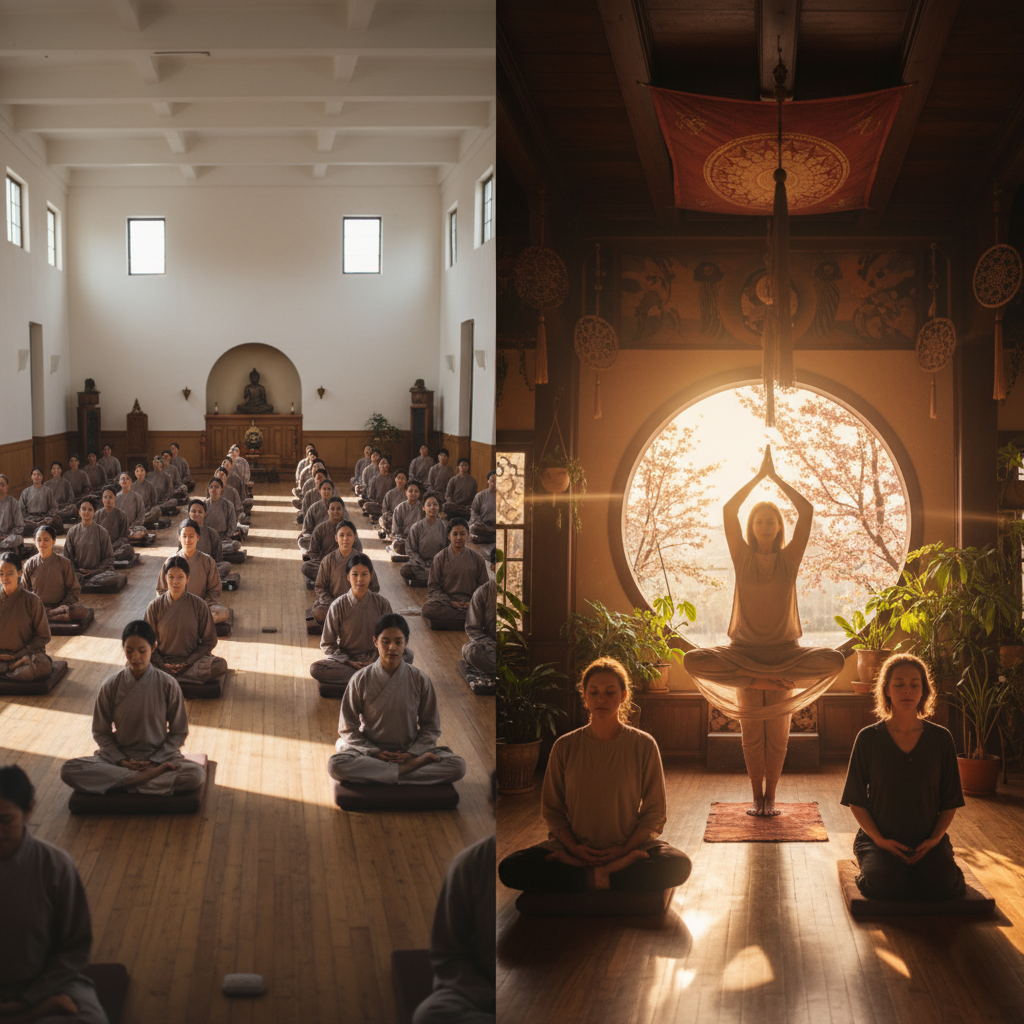
Mindfulness-Based Stress Reduction (MBSR) is more modern, derived from Jon Kabat-Zinn's work. MBSR teaches awareness of thoughts, sensations, and emotions without judgment, often with shorter timeframes (three to five days). It's gentler than Vipassana and typically includes more structure: guided meditations, body scans, brief instruction periods. You might have contact with teachers. MBSR integrates better for people with anxiety or trauma histories because it's less confrontational.
Kundalini Activation is an energy-based practice distinct from breath-focused meditation. Facilitators like Nina and Nuno at Radical Wellness Retreat (€1,635–€1,847 for seven to eight days) lead Kundalini sessions that activate the energy systems in your body, often resulting in shaking, emotions, or movement. If traditional sitting meditation feels static, this offers a more somatic, embodied path. These retreats include mindful movement alongside stillness.
Zen meditation emphasizes simplicity and direct realization. Sessions are shorter and more frequent, with less instruction. Teachers might use koans (paradoxical questions) or direct dialogue to provoke insight. Zen retreats are rare in Alentejo but available at centers like Monte da Orada, where the trekking trails and starry sky enhance the nature-centered Zen approach.
The practical choice: Vipassana if you want structured, deep work on reactivity; MBSR if you're managing anxiety or new to meditation; Kundalini if you're drawn to embodied practice and energy work; Zen if you want simplicity and nature immersion. Your first retreat is often Vipassana because it's most available and most transformative for first-timers. Your second might be another tradition once you understand your own mind's patterns.
How Do You Prepare Mentally and Physically for Your First Silent Retreat?
Showing up to a retreat without preparation is like running a marathon you haven't trained for. Your mind will revolt. Preparation softens that rebellion.
Eight weeks before your retreat: Choose your tradition and center. Research reviews and instructor credentials. Begin a daily meditation practice if you don't have one, even just ten minutes a day. This primes your nervous system so the jump to eight hours of meditation isn't traumatic. Write down your intention: Why are you going? What are you hoping to understand? Grief, burnout, restlessness, spiritual seeking—naming it matters. Also, schedule difficult conversations: tell family and close friends your exact dates and the fact that you'll be unreachable except in genuine emergencies. This prevents them from worrying or feeling abandoned.
Four weeks before: Assess your physical health. Are you sleeping well? Stable on medications? If you take psychotropic medications (antidepressants, anti-anxiety drugs, antipsychotics), confirm with both your prescriber and the retreat center that meditation is safe for you. Silent retreats are contraindicated (not recommended) for untreated bipolar disorder, active psychosis, severe trauma, or unstable mental health. This isn't judgment; it's safety. The intensity of turning inward without external stimulus can destabilize certain conditions. If you're unsure, contact the retreat center's screening process before booking.
Schedule a dental checkup (tooth pain during meditation is torture). See a doctor if you have joint issues—sitting for hours requires physical stability. If you're on pain medication, discuss weaning off with your doctor before the retreat; alertness matters more than comfort for ten days.
Two weeks before: Reduce screen time progressively. Cut back caffeine and alcohol. Start sleeping eight hours nightly. If you drink coffee daily, taper to avoid withdrawal headaches mid-retreat. Buy comfortable meditation clothing: loose linen or cotton pants, a simple t-shirt or sweater, socks. Many centers ask for simple, modest clothing to minimize distraction.
Final week: Confirm all logistics with the center. Ask about airport transfers, meal timing, arrival procedures, emergency contact protocols. Prepare your packing list (detailed below). Reduce your work commitments as much as possible the week after your retreat—you'll be emotionally tender and need integration time.
A retreat isn't a vacation. Your brain will work harder these ten days than it has in years. Treat it like training: rest, hydrate, and protect yourself from overcommitment before and after.
What Should You Pack for an Alentejo Silent Retreat? A Complete Checklist
Packing light keeps your mind uncluttered. You're not trying to look good. You're trying to disappear into meditation.
Meditation and movement clothing
- Three loose cotton or linen pants (not jeans; mobility matters)
- Five simple long-sleeved or short-sleeved shirts, neutral colors (grey, white, beige)
- One warm sweater or fleece (essential year-round in Alentejo)
- One light scarf (doubles as a shawl in the meditation hall)
- Seven pairs of plain socks (you'll wear them indoors; get good ones)
- Comfortable slip-on shoes or slip-on meditation shoes for walking between halls
- One pair of sandals for around the property
- One pair of closed walking shoes (if the center offers nature walks)
- Undergarments for one week (retreat centers wash laundry mid-retreat)
- Simple pajamas
- One bra or supportive undergarment (comfort is important during long sits)
Climate and seasonal adjustments
Alentejo ranges from 5°C in winter to 35°C in summer. Spring and autumn are ideal (mild, 15–20°C). For winter retreats, pack: thermal underlayers, heavy sweater, warm socks, a warm coat for outside time. For summer retreats, pack: sun hat, lightweight layers, light scarf or shawl to protect from strong sun in the meditation hall, lightweight long pants to protect skin.
Toiletries and medications
- Toothbrush and toothpaste
- Deodorant (most centers use unscented; check)
- One bottle of unscented soap or body wash (many centers prefer or provide natural products)
- Shampoo and conditioner (or ask the center if they provide these)
- Any prescription medications in original labeled bottles with copies of prescriptions
- Any supplements you take regularly
- Feminine hygiene products if needed (retreat centers may not stock these; bring your own)
- Basic pain reliever (ibuprofen or paracetamol) for headaches
- Sunscreen
- Lip balm with SPF
- Small nail clippers (helpful for preventing nervous picking)
Personal items
- Eyeglasses and case if needed
- Contact lens supplies and solution
- Earplugs (shared rooms can be noisy)
- One thin towel or small yoga towel (many centers provide towels; confirm)
Optional items that some retreatants find helpful
- A journal with pen (some centers prohibit this; confirm first)
- One book for the journey to Alentejo (most centers request you finish reading before day one)
- Meditation cushion or zafu if you have a preferred height (many centers provide these)
What absolutely NOT to bring
- Phone or any device with internet connection
- Laptop, tablet, or e-reader
- Books, magazines, or reading material (these distract during the retreat period)
- Headphones or music
- Journaling material beyond a basic notebook
- Any recreational substance (alcohol, cannabis, anything stimulating)
- Photos or materials from your daily life (they become emotional hooks)
- More than one comfortable outfit (simplicity is the point)
- High-end or luxury items that create anxiety about loss or damage
How Much Does a Silent Retreat in Alentejo Cost, and What's Actually Included?
Price varies wildly, from €464 to €4,350 per person. Understanding what drives that spread prevents sticker shock and helps you choose by value, not just cost.
| Retreat Center | Duration | Accommodation | Price (per person) | Key Included | Not Included |
|---|---|---|---|---|---|
| Quinta Marugo | 6 days/5 nights | Private room, shared bath | €1,300–€1,500 | Meals (90% organic), meditation, use of biological pool and gardens | Travel insurance, airport transfer (can arrange), massage |
| Casa da Lima | 4 days | Shared or private room (TBA) | €464 | Meals, guided meditation and mindful walking, forest immersion | Travel, airport transfer |
| Monte da Orada | 4 nights | Cabin or room (TBA) | €1,027–€1,374 (varies by season) | Meals, meditation, sauna, pool, trekking trails | Alcohol or recreational activities |
| Ruah Yoga Retreat Center | 6 nights | Studio double (40m²) or Farmhouse (64m²) | €2,900–€4,350 depending on accommodation and occupancy | Yoga, meditation, meals from on-site greenhouse, 3 pools, spa, sauna, cold plunge, boardwalks | Airport transfer (available for €75–€100), massage (available add-on) |
| Radical Wellness Retreat | 7–8 days | Shared or private room (TBA) | €1,635–€1,847 | Meals, Kundalini activation sessions, mindful movement, accommodation | Travel, specific dietary add-ons |
| Calipo (Soulful Sanctuary) | Flexible (6 days typical) | Modernist apartment with fireplace | €3,000 (full venue rental for groups) | Venue (furnished), grounds access | Meals, facilitator/instructor, linens (confirm) |
| Projeto SimplesMente | 12 days | Residential (TBA) | Free / donation-based | Meditation, accommodation, meals, waterfront location on reservoir | Donations encouraged; specific services vary |
What drives the price variation
Luxury and amenities are the biggest factor. Ruah Yoga's three infinity pools, Turkish spa, and on-site greenhouse (with farm-to-table meals) justify its €4,350 top price. Quinta Marugo's €1,500 is higher than Casa da Lima's €464 because it includes 90% organic meals from its own gardens and has a biological pool. Monte da Orada sits in the middle with trekking trails and sauna at moderate cost.
Staff-to-participant ratio affects price. Ruah Yoga caps groups at 20–30 to maintain intimate teaching. Larger centers with more participants can spread costs. Quinta Marugo limits groups to 12 for personalized guidance.
Meal quality and sourcing matter. Organic, locally sourced, vegetarian meals from on-site gardens cost more than standard catering. If you have dietary restrictions (vegan, gluten-free, allergies), confirm the center can accommodate before booking; some add surcharges.
Accommodation type: private rooms cost more than shared dormitories. Quinta Marugo charges more for private bathrooms. Ruah Yoga's farmhouse apartments (64m²) cost more than studio doubles (40m²).
Duration: Longer retreats (ten to twelve days) have lower daily costs than shorter ones because instructor and facility costs spread across more days.
What's never included and you should budget for
Travel insurance (strongly recommended; typical cost €15–€30). Airport transfers from Lisbon (usually €50–€100 per person if you arrange through the center, or €20–€40 via shuttle bus). Medications or supplements not in your daily regimen. Incidentals like extra socks or toiletries you forgot. Post-retreat meals or activities outside the retreat schedule. Travel to and from Lisbon.
Which Alentejo Retreat Centers Offer the Best Value for Your Budget and Preferences?
Here's where the real decisions happen. Each center has a distinct personality, facility quality, and teaching approach.
Quinta Marugo, Serpa
Located in Serpa (7830-324 Serpa, Portugal), Quinta Marugo is the most specialized Vipassana center in Alentejo. The 6-day/5-night retreats run €1,300–€1,500 per person and are limited to twelve participants, meaning intimate guidance.
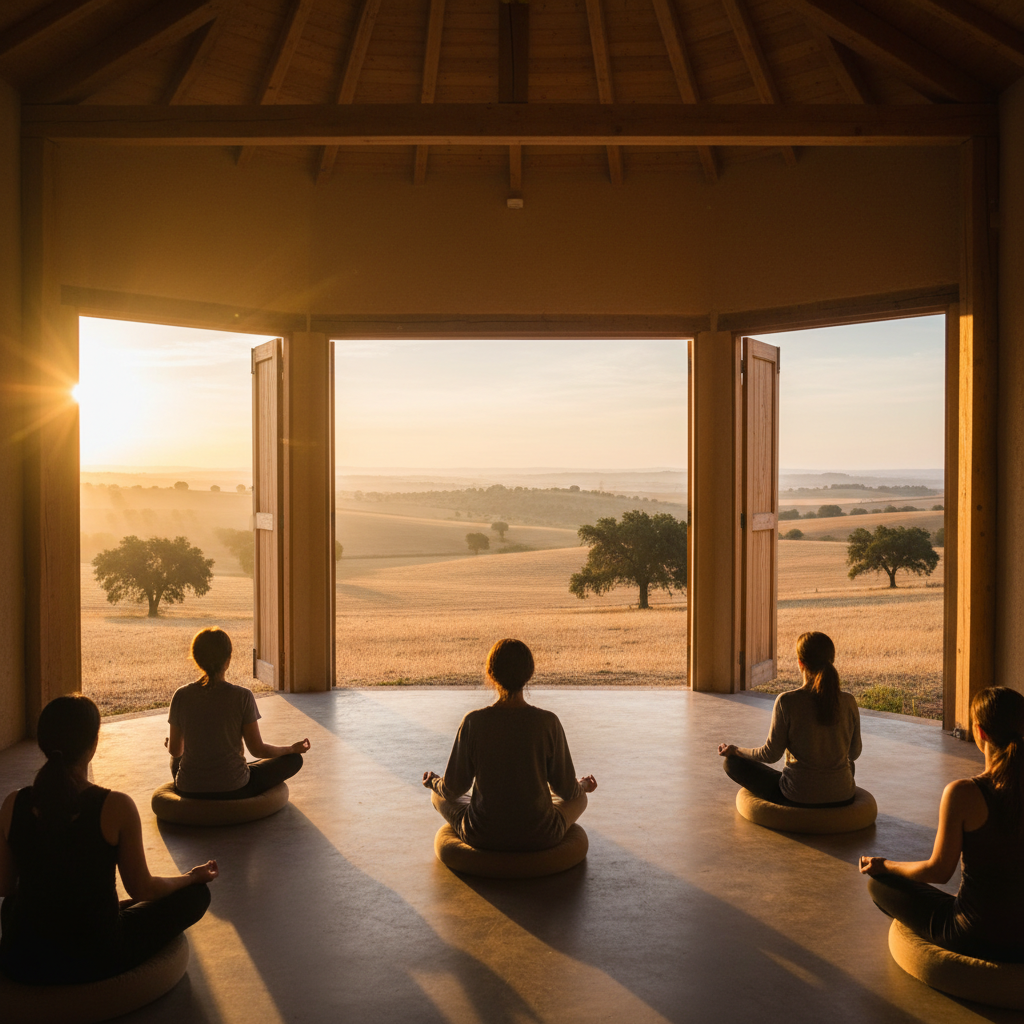
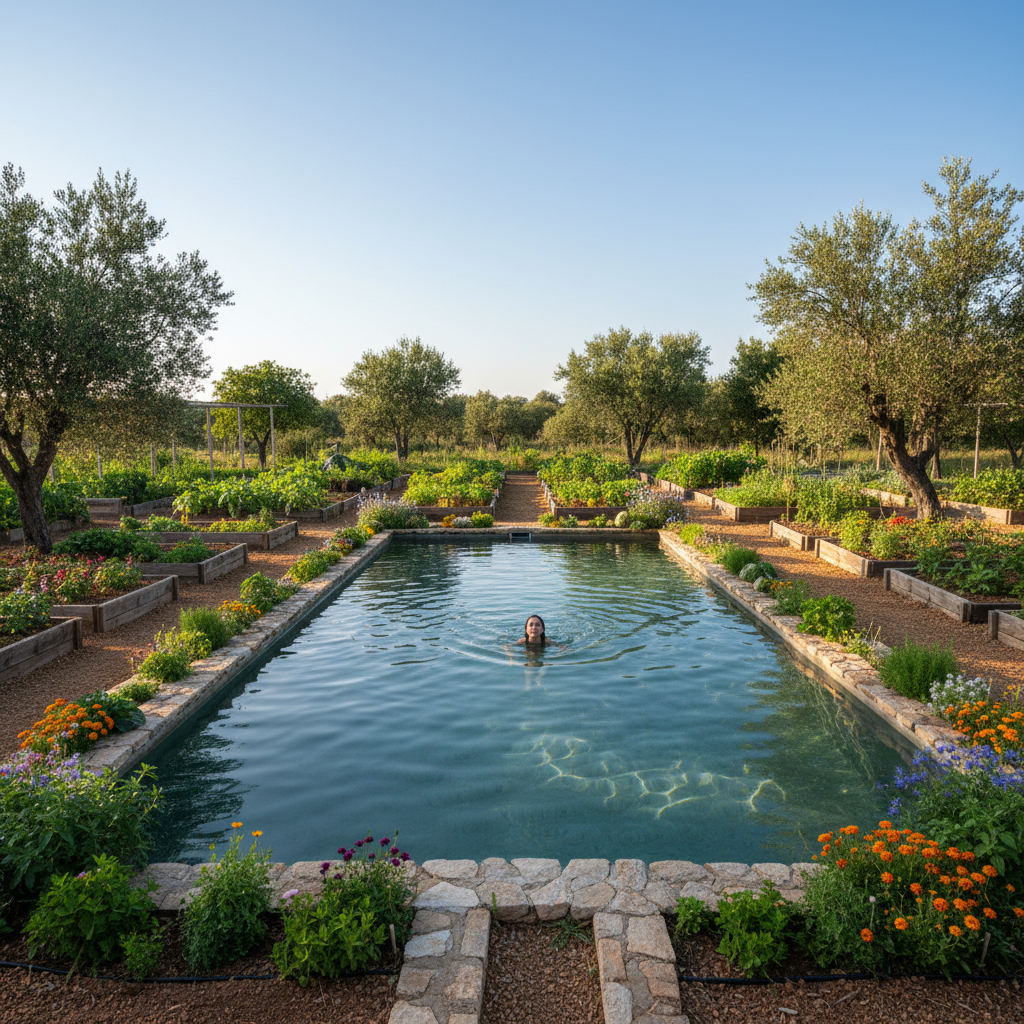
The facility itself is designed for practice. The pagoda meditation hall is the centerpiece, a serene wooden structure where morning light filters through open doorways. Ten elegant rooms have private bathrooms and views across the property. The biological pool (spring-fed, no chemicals) sits beside organic vegetable gardens where 90 percent of retreat meals are grown on-site. You eat seasonal, vegetarian meals prepared by the retreat kitchen from literally what's growing outside your window. Breakfast might be fresh bread and local honey. Lunch, leafy greens and seasonal vegetables. Dinner, soup and bread.
The teachers, Melissa Matteucci and Mary Ann (founder), are trained Vipassana instructors with international experience. Mary Ann founded Quinta Marugo specifically to create a Vipassana center. The retreats follow a traditional curriculum: ninety-minute meditation sessions, structured rest periods, recorded discourse each evening, and a full day of silence on the sixth day with no group instruction.
Who benefits most: Serious meditators wanting depth, Vipassana practitioners seeking a retreat in their own language (French language focus; English language retreats available on request), people drawn to organic/locally sourced meals and ecological settings.
Booking: Direct via quintamarugo.com. Group size is limited, so book four to six weeks ahead during peak season (spring and autumn).
Ruah Yoga Retreat Center, Alentejo Coast
Ruah Yoga is the luxury option: two hours from Lisbon airport, studio double rooms start at €2,900, with single rooms up to €4,350 for six nights. The facility is expansive: dual accommodation types (studios with kitchenettes or farmhouse apartments with full kitchens), three infinity pools (one indoors, one heated, one outdoor), Turkish spa, outdoor sauna, cold plunge, boardwalks crossing the property, on-site gardens and greenhouse, stables for horseback riding (confirm availability), and a lake.
Meals are farm-to-table, sourced from the on-site greenhouse. The retreat teaches meditation and yoga, not pure silence like Vipassana, but you'll have structured silent practice periods. Ruah, the primary teacher, specializes in Vinyasa flow yoga and meditation. Groups run 20–30 participants depending on accommodation mix.
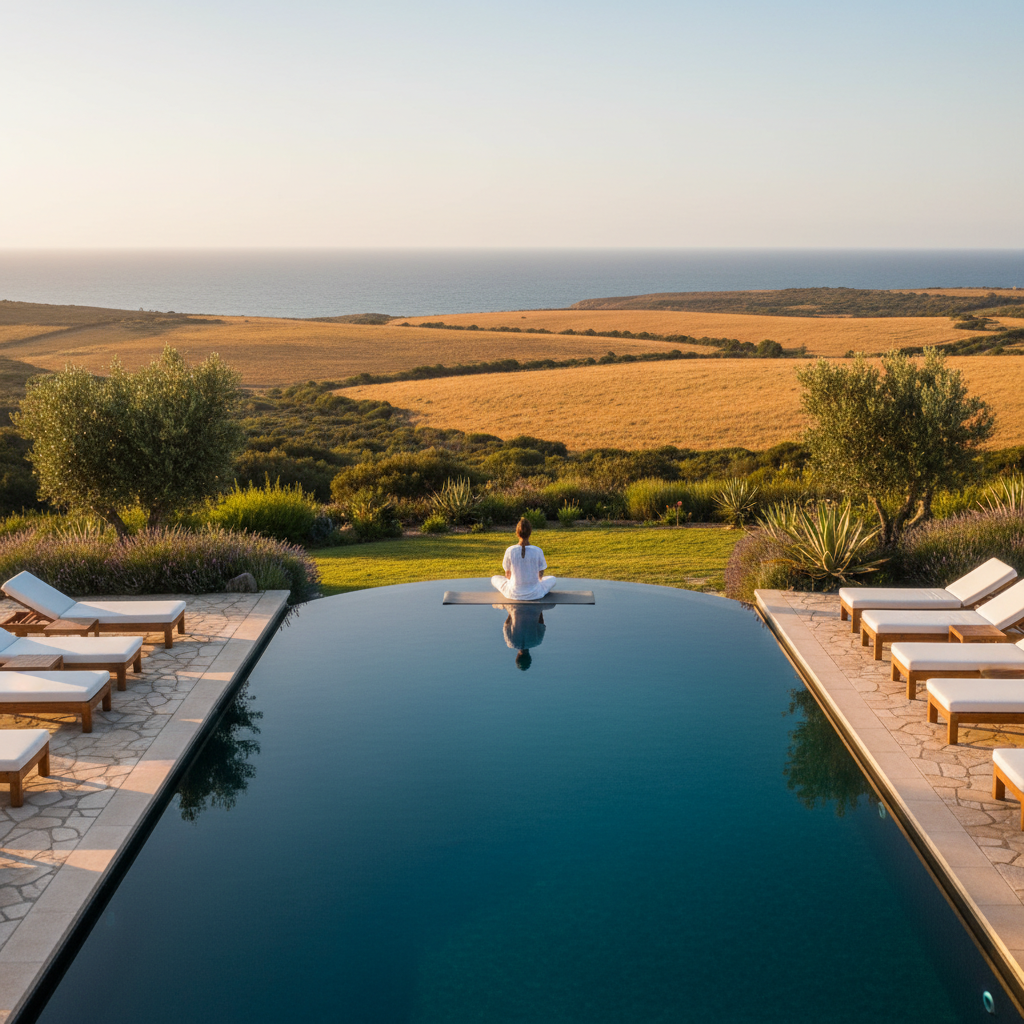
The infinity pool overlooking the Alentejo coast is the signature amenity. At golden hour, with the view unfolding to the horizon, it feels like the boundary between you and the landscape dissolves.
Who benefits most: People seeking yoga and meditation combined, luxury wellness seekers, those who want amenities alongside practice, anyone who finds pure silence overwhelming or prefers embodied movement.
Booking: ruahyoga.com. Note: listed July 2025 retreats are outdated; verify 2026 schedule before booking. Capacity fills quickly for summer dates.
Monte da Orada, Alentejo
A four-night all-inclusive retreat ranging €1,027 in spring (April 11–15, 2026) to €1,374 in summer (August 1–5, 2026). Monte da Orada is ideal for budget-conscious retreaters seeking value. The all-inclusive pricing includes accommodation, vegetarian meals, meditation instruction, sauna, pool, and access to trekking trails through the property.
The setting emphasizes nature: you're surrounded by beautiful land with starry skies for night meditation and trail walks during free time. The retreat teachings lean toward mindfulness and gentle movement rather than intense Vipassana, making it accessible for beginners.
Who benefits most: Budget-conscious first-timers, people who want nature immersion, those preferring a gentler pace and shorter duration.
Booking: Inquire via BookRetreats listing or direct contact. Minimum group size of six participants.
Casa da Lima, Ribeira de Alcamalouque
The most affordable entry point at €464 for a four-day mindful walking retreat set in forest. Casa da Lima emphasizes stillness, good food, and gentle movement. The retreat is fully immersive in nature without luxury amenities, ideal for seekers wanting to experience silent practice without high cost.
The forest setting is the retreat itself—your teachers are trees and sky and your own returning breath.
Who benefits most: Budget travelers, beginners wanting low-risk trial of silent retreats, people drawn to forest immersion.
Booking: Inquire via BookRetreats or Retreat.guru. Contact the center directly for current dates beyond June 2026.
Calipo (Soulful Sanctuary & Creative Hub), Golden Plains
Calipo is not a retreat center in the traditional sense; it's a venue. Twenty-six modernist apartments with fireplaces sit across expansive grounds in the golden plains of Alentejo, 1.5 hours from Lisbon. The venue rental model (€3,000 for six-day full venue access) suits organized groups or individual facilitators booking custom silent retreats.
The aesthetic is high-end and modern rather than spiritual; this is for groups organizing their own retreat programming or bringing an external teacher.
Who benefits most: Organized groups of eight to fifteen people with a private facilitator, retreat centers seeking a secondary venue, creative hubs.
Radical Wellness Retreat, São Teotónio, Beja
A seven- to eight-day Kundalini Activation Process retreat (€1,635–€1,847, all-inclusive) led by Nina and Nuno. This is distinct from traditional silent meditation: Kundalini practices activate energy systems in your body, often resulting in movement, emotion, or catharsis. The retreat runs seasonal dates: April 26–May 2, 2026, and October 3–10, 2026, in a forest setting in Mafra region.
If sitting still feels painful or inauthentic to you, Kundalini's embodied, movement-based approach offers an alternative.
Who benefits most: Energy-sensitive practitioners, people who've felt stuck in stillness-focused practices, seekers wanting somatic and energetic work alongside meditation.
How Do You Get to Alentejo Retreats from Lisbon and Beyond?
Most retreat seekers arrive via Humberto Delgado Airport (Lisbon, LIS), 7km north of the city center. From here, Alentejo is 1.5 to 2.5 hours south depending on which retreat you're attending.
Flying to Lisbon
International flights arrive at Terminal 1 (main) or Terminal 2 (seasonal budget carriers). Major airlines serving Lisbon: TAP (Portuguese national carrier, direct from many European and North American hubs), Ryanair (budget flights from EU), Lufthansa, Air France, British Airways, United. Flight times from the US East Coast run 8–10 hours direct; from European hubs, 2–4 hours. Budget €50–€300 per round-trip depending on origin.
Ground Transportation from Lisbon to Retreat
Option 1: Retreat-arranged airport transfer. Many centers (Quinta Marugo, Ruah Yoga, Radical Wellness) offer airport transfers: typically €50–€100 per person one-way. Book this when you register for your retreat. The driver meets you at baggage claim with a sign. Reliable and stress-free.
Option 2: Rental car. If you want flexibility to explore Alentejo before or after your retreat (recommended for integration), rent from Hertz, Budget, or Europcar at Lisbon airport (€35–€60/day). Drive south on the A6 motorway toward Évora and Serpa. Quinta Marugo near Serpa is 1.5 hours south; coastal retreats (Ruah Yoga) are 1.5 hours southwest. Parking at retreat centers is included.
Option 3: FlixBus shuttle. The budget bus service runs from Lisbon to towns like Serpa or Évora (€5–€15, journey 2–3 hours). You'll then need a taxi or pickup to the retreat center, adding time and cost. Useful if traveling alone and on strict budget.
Option 4: Train to regional hubs. Comboios de Portugal (CP) operates trains from Lisbon to Évora (2 hours, €10–€15) or Serpa region. From these hubs, arrange taxi or retreat pickup. Less convenient than direct transfer but scenic.
Once in Alentejo
Distances from key town hubs to retreat centers (approximate):
- Lisbon airport to Quinta Marugo (Serpa): 125km, 1.5 hours drive
- Lisbon airport to Ruah Yoga (coast): 110km, 1.5 hours drive
- Lisbon airport to Radical Wellness (São Teotónio, Beja): 180km, 2.5 hours drive
- Lisbon airport to Monte da Orada: 140km, 2 hours drive (varies by exact location)
Cultural exploration before or after retreat
If you arrive early or stay extra days post-retreat (highly recommended for integration), consider day trips:
- Évora (UNESCO World Heritage town, 1 hour from central Alentejo): Medieval walled city with Roman temple, cathedral, university, excellent restaurants. Explore day-of-arrival or two days post-retreat.
- Serpa (30 minutes from Quinta Marugo): Medieval town, local restaurants, Pulo de Lobo waterfalls nearby for hiking.
- Mina de São Domingos (45 minutes from Serpa): Abandoned copper mine turned lake and nature reserve, stunning geology, hiking.
- Alentejo wine region: The region is famous for bold red wines. Post-retreat wine tasting is a pleasant grounding activity.
Arrive one full day before your retreat begins. Jet lag is real, and you need sleep to meditate properly. Rushing from the airport to meditation within hours sets you up for fatigue and irritation.
What Questions Should You Ask Before Booking Your Silent Retreat?
Before you hand over your deposit, ask the retreat center these questions. A transparent, prepared center gives detailed answers. A vague response is a red flag.
Safety and emergency protocols
- If someone becomes emotionally distressed during the retreat, what support is available? (Ask about on-site counselors or protocols.)
- What constitutes an emergency that would allow me to break silence or leave?
- How do I contact family if someone dies or there's a genuine crisis at home?
- Is travel insurance required or recommended? (Most centers recommend it; cost €15–€30.)
- What are your COVID protocols if relevant?
- Are there trained first aid responders on staff?
Medical and mental health screening
- Do you screen participants for contraindicated conditions (untreated bipolar disorder, active psychosis, severe PTSD)?
- Can I discuss my mental health history (anxiety, depression, trauma) with you before booking?
- Are there recommendations for how long someone should be medication-stable before attending?
- If I'm on psychiatric medication, should I notify you?
Dietary and accessibility
- Can you accommodate vegan, gluten-free, or allergy-specific diets? (Ask about surcharges.)
- Are there accessible accommodations for people with mobility limitations?
- Can I attend if I have joint pain or physical limitations to sitting?
- Are cushions or meditation benches available if I can't sit on the floor?
Duration, difficulty, and group composition
- What's the skill level required? Is this for beginners or experienced meditators?
- How many participants typically attend?
- What's the age range of previous participants?
- Can I leave early if it becomes too difficult? (Most centers allow early departure with forfeited payment.)
- What's the full daily schedule (wake time, meditation hours, free time)?
Instruction and facilitation
- What are the teacher's credentials and training? (Ask for specifics: How many years? Which traditions? Any formal certifications?)
- Is the teacher available for one-on-one consultation if I'm struggling?
- What's the student-to-teacher ratio?
- If the primary teacher falls ill, is there a backup instructor?
- How long has the teacher been leading retreats?
Refund and cancellation policy
- What's the refund policy if I cancel?
- Is refund different if I cancel two weeks out versus two days out?
- If the center cancels (insufficient enrollment, center emergency), what's offered?
- Can I defer my booking to a future date instead of requesting refund?
Logistics and accommodations
- Are rooms private or shared? Can I request private? (Ask about costs.)
- What's included in the room? (Linens, towels, toiletries?)
- Is hot water available? (Important for comfort.)
- Are there quiet hours, or is the center silent 24/7?
- What's the WiFi situation? (Should be none or very limited for guests.)
- Can I do laundry mid-retreat?
Communication during retreat
- How do family members contact me in a genuine emergency?
- Is there a retreat phone number they can call?
- What counts as an "emergency" that would interrupt my retreat?
Meals and drinks
- What's the meal schedule?
- Are meals included in the price?
- Are there hot drinks available (tea, coffee) after morning meditation?
- What's the drinking water situation?
- If I have specific nutritional needs, can you discuss?
Community and support after retreat
- Do you offer post-retreat integration support or follow-up sessions?
- Is there a community of alumni I can connect with?
- Are there optional group calls or meetings in the weeks after?
A retreat center that welcomes these questions and answers thoroughly is trustworthy. Centers that rush you or dismiss questions may have something to hide.
Take your time deciding. A silent retreat isn't a commodity. It's an investment in your internal landscape. Choosing the right center, the right tradition, and the right timing means the difference between a breakthrough and a grueling week you resent.
Start by identifying your meditation tradition, budget, and duration. Then visit the center's website, read recent reviews on yoga retreat platforms, and schedule a call with the facilitators. After you've spoken with them, you'll know if it's the right fit.
Book your retreat at least six weeks ahead during peak season (April to May, September to October) to secure your spot. For off-season dates (November to February), you can book three to four weeks out. Once you've registered, follow the preparation timeline above. You've got this.